How can materials automatically perform protective functions in the event of a fire, and why are sustainable flame retardants becoming increasingly important? The Fraunhofer Institute for Applied Polymer Research IAP presented answers to these questions at FeuerTrutz 2026 in Nuremberg. From June 24 to 25, 2026, researchers showcased thermoresponsive functional materials and bio-based flame retardants for fire protection applications in construction, mobility, and industry.
Fire protection systems must function reliably in an emergency. At the same time, demands for energy efficiency and sustainability are increasing. Many existing systems rely on mechanical components or electronic controls. This increases complexity and maintenance requirements. Fraunhofer IAP at the Potsdam Science Park is therefore developing customized material solutions that respond autonomously to temperature changes and respond to critical situations without an external power supply.
How can materials autonomously activate protective functions?
Dr. Thorsten Pretsch, head of the research division Functional Polymer Systems at Fraunhofer IAP, provides the answer: “Our shape-memory polymers use temperature as a natural trigger. This allows fire protection functions to be activated without additional sensors, electronics, or external power. This opens up new possibilities for low-maintenance yet high-performance fire protection systems.”
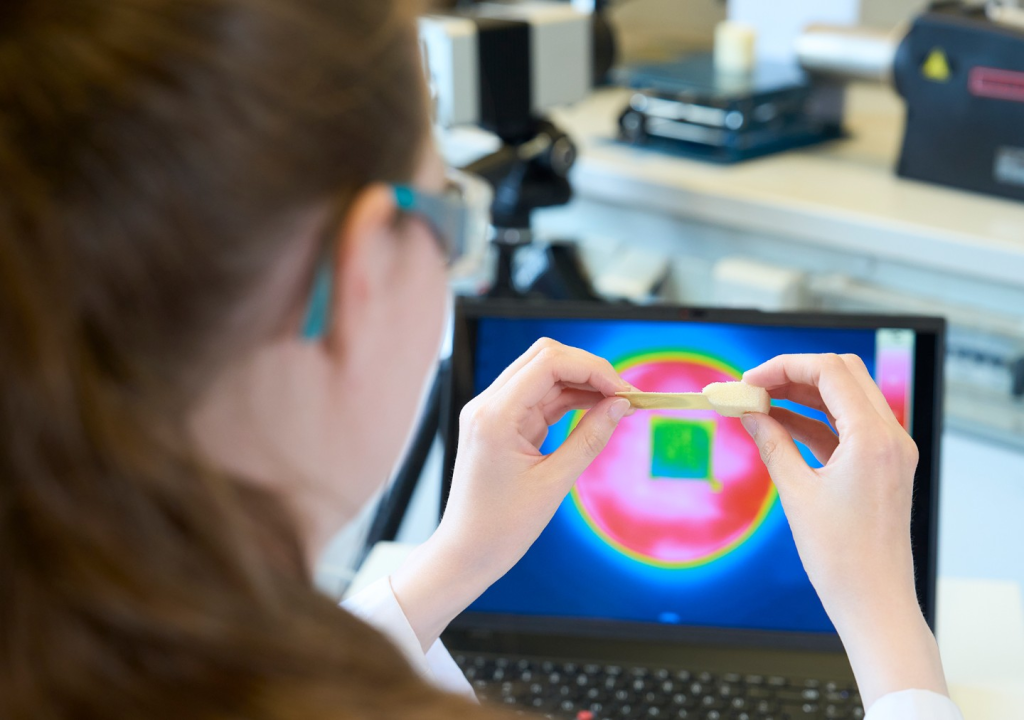
Unlike many conventional solutions, the material reacts independently to temperature changes. The switching temperature can also be specifically tailored to the respective application, for example to 60 °C or 120 °C. This allows fire protection functions to be precisely adapted to different application scenarios. Furthermore, the materials can be programmed to assume a defined target geometry upon reaching the trigger temperature. This enables them, for example, to seal duct cross-sections, close gaps, or perform other protective functions autonomously.
4D printing makes fire protection components responsive
A demonstrator featuring a thermally activated fire damper illustrates how this principle can be applied in practice. The actuator, manufactured using 4D printing, reacts to the heat generated during a fire and automatically closes off the duct cross-section. In the future, such systems could be used, for example, in ventilation systems or cable and pipe penetrations. “4D printing takes shape-memory polymers in fire protection to a new level. It enables geometrically highly complex, custom-tailored, and functionally programmed components—without tools, with minimal material waste, and with integrated thermal responsiveness,” says Pretsch.
How does a film turn into protective foam?
Another development approach is based on the FOIM principle (Foil + Foam). In this process, a shape-memory polymer foam is first programmed into a compact film state. When exposed to elevated temperatures, the material automatically returns to its original foam form. This concept offers particular advantages for fire protection: When installed, the material requires very little space and is easy to handle. In the event of a fire, it expands automatically and can seal off cavities. Potential applications range from fire door seals to fire barriers in automotive and aircraft manufacturing, as well as thermal protection systems for batteries.
What are the benefits of bio-based flame retardants in plastics and coatings?
“Bio-based flame retardant additives such as starch phosphates are an environmentally friendly alternative to conventional solutions, which often contain bromine- or chlorine-based components. In the event of a fire, halogenated flame retardants may generate hazardous combustion by-products; moreover, they limit the recyclability of plastics,” explains Dr. Christian Neumann, a researcher in the Microencapsulation and Polysaccharide Chemistry department at Fraunhofer IAP. Starch phosphates are used, among other things, to make thermoplastic bioplastics such as PLA safer for fire-safety-sensitive applications, for example in electronic components.
Bio-based flame retardant additives not only meet strict environmental and health standards, but can also be derived from natural sources or waste materials. This reduces dependence on imported raw materials. At the same time, shorter transport routes and the elimination of energy-intensive raw material extraction can help reduce the carbon footprint. Bio-based flame retardants contribute both to safety and to the promotion of a circular economy.
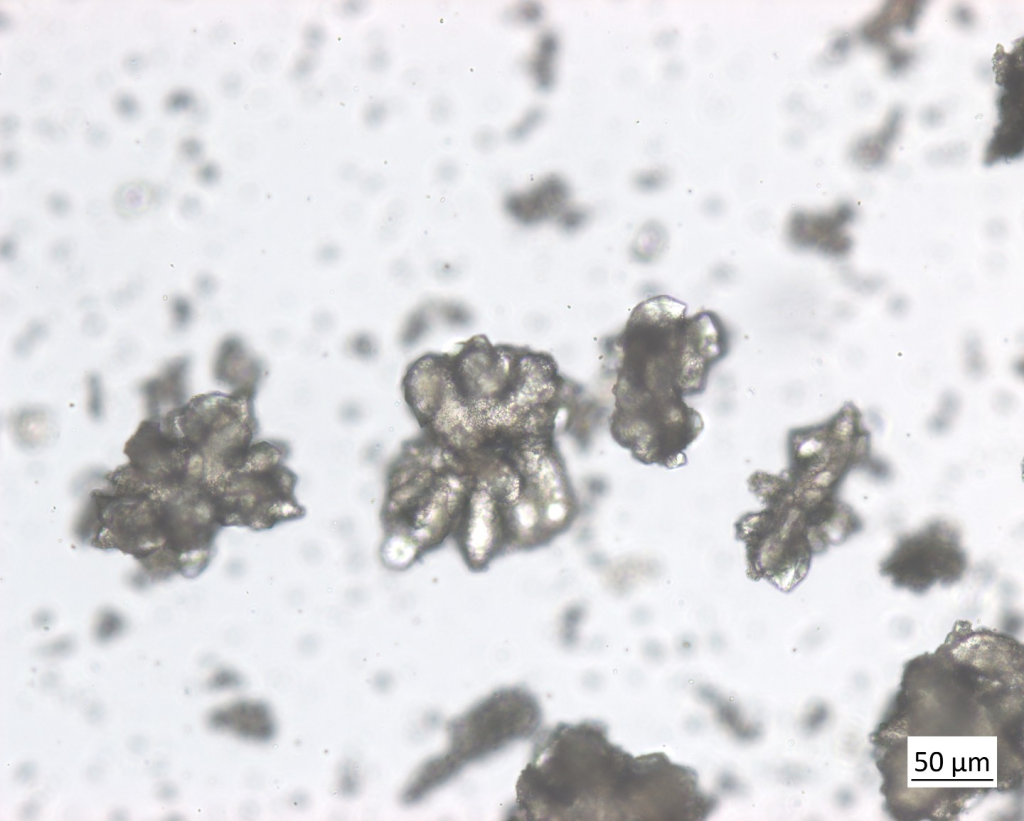
In addition, Fraunhofer IAP is developing microencapsulated bio-based ammonium salts as a sustainable alternative to conventional flame retardants. When exposed to heat, they form a protective layer that effectively insulates the material. Microencapsulation increases the thermal stability of the ammonium salts, thereby enabling their incorporation into plastics, coatings, and other material systems.
Which companies can benefit from these developments?
The technologies presented are aimed at companies in the construction, HVAC, and building services industries, the mobility industry, the aviation sector, and the plastics and materials development industry. Of particular interest are solutions for applications that aim to combine reliable fire protection with low weight, high design freedom, and minimal maintenance requirements. Fraunhofer IAP supports industry partners along the entire innovation chain—from material development through feasibility studies and demonstrators to the scaling of new technologies. Current developments offer a wide range of opportunities for joint research and development projects.